


Live betting, also known as in-play betting, allows bettors to place wagers while a sporting event is already in progress. Unlike pre-match betting, where odds remain relatively stable until the game begins, live betting odds constantly change based on what is happening during the match. A goal, wicket, red card, injury, or shift in momentum can cause odds to move within seconds.
Understanding why odds change and how to interpret those movements can help bettors identify potential value and make more informed betting decisions. In this guide, you’ll learn how live betting odds work, what factors influence their movement, and how to use odds changes to improve your overall in-play betting strategy.
Live betting odds are the odds offered while a sporting event is already in progress. Unlike traditional betting, where wagers are placed before the match starts, live betting allows bettors to react to what is happening in real time and place bets during the game.
Pre-match odds are set before an event begins. They are based on factors such as team form, player statistics, injuries, weather conditions, and market demand. Once the event starts, these odds are no longer considered pre-match odds.
Live or in-play odds are generated during the event and continuously adjusted based on the current situation. A goal, wicket, red card, injury, or momentum shift can cause immediate changes in the odds.
Because live odds reflect real-time developments, they are much more dynamic than pre-match odds and can create frequent betting opportunities throughout the event.
Key Points:
| Feature | Pre-Match Odds | Live Odds |
|---|---|---|
| Timing | Before Event | During Event |
| Frequency of Change | Rare | Constant |
| Risk Level | Lower | Higher |
| Opportunities | Limited | More Frequent |

Live betting odds change constantly during a match, and bookmakers rely on advanced technology to keep them accurate. They use real-time information, statistical models, and risk management strategies to determine the latest prices for bettors.
Bookmakers receive instant updates from live data providers that track every important event in a game. These feeds deliver match statistics, event tracking information, and other key details within seconds. Automated systems process this data immediately, allowing odds to adjust as the action unfolds.
At the core of live betting are probability models powered by predictive algorithms. These systems analyze current match conditions and compare them with historical data from thousands of previous games. By estimating the likelihood of different outcomes, bookmakers can generate updated odds that reflect the latest situation on the field.
Bookmakers also focus on managing financial risk. If too much money is placed on one outcome, they may adjust the market to reduce potential losses and balance their liability. This ensures that odds remain competitive while helping bookmakers maintain a stable betting market.
Key Factors That Influence Live Odds:
These factors work together to determine how betting odds change during live matches, often leading to rapid shifts throughout the game.
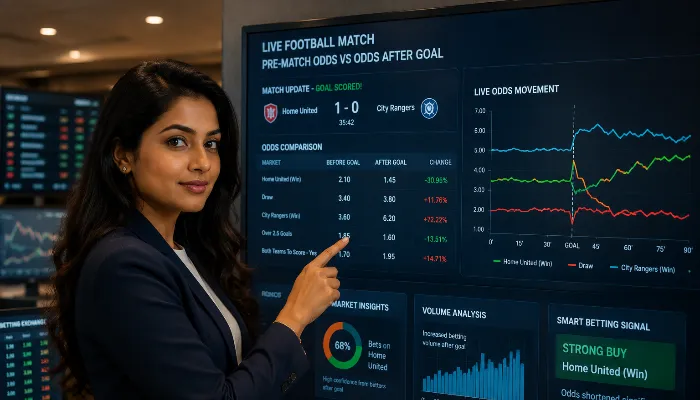
Live betting odds can change within seconds when important moments happen during a match. Bookmakers constantly update odds based on new information and the changing likelihood of different outcomes.
A goal is one of the biggest triggers for odds movement in football. When a team scores, the match winner odds usually shift immediately in favor of the team that takes the lead. The closer the game is to full time, the greater the impact of a goal on the betting markets.
Wickets can dramatically affect live betting odds, especially in limited-overs cricket. A batting collapse often reduces a team’s chances of posting or chasing a competitive score. During a run chase, losing key batters can quickly lower the probability of successfully reaching the target, causing major odds adjustments.
A red card often creates an instant market reaction because a team must continue with fewer players. Penalty decisions can also cause sharp odds changes, particularly when a goal is likely to result from the opportunity.
When an important player is injured, bookmakers reassess the team’s strength and winning chances. The impact is even greater if the injured player is a star striker, captain, or match-winning performer.
As the clock continues to tick down, comeback opportunities become less likely. Teams that are leading generally see their odds shorten, while the trailing side’s chances decrease as less time remains.
Quick Summary Box
Common triggers that change live betting odds:
To understand how live betting odds work, let’s look at a simple football match scenario. As events unfold during the game, bookmakers adjust odds to reflect each team’s updated chances of winning.
| Match Situation | Team A Odds | Team B Odds |
|---|---|---|
| Before Match | 2.00 | 2.00 |
| Team A Scores | 1.40 | 3.50 |
| Team B Equalizes | 2.10 | 2.10 |
| Team A Receives Red Card | 3.00 | 1.90 |
In this example, both teams start with equal odds because they are considered evenly matched. When Team A scores, its odds shorten from 2.00 to 1.40 because its probability of winning increases significantly. At the same time, Team B’s odds drift to 3.50 since it is now trailing.
After Team B equalizes, the match becomes balanced again, and the odds return to similar levels. Later, Team A receives a red card, reducing its chances of winning. As a result, Team A’s odds drift to 3.00, while Team B’s odds shorten to 1.90 because it now has a numerical advantage and a higher probability of success.
Live betting odds do not always move because of goals, wickets, or other obvious match events. Sometimes, odds shift due to market activity happening behind the scenes.
When a large number of bets or a few high-value wagers are placed on one outcome, bookmakers may adjust the odds to manage their risk and balance the market.
Experienced bettors, often called “sharp bettors,” can influence odds movement. When bookmakers notice respected bettors placing significant wagers, they may react by changing the odds accordingly.
Public opinion also plays a role. If the majority of bettors begin backing one side, odds can move even when nothing significant has happened on the field.
Other factors that can affect live odds include:
These factors show that live betting odds reflect not only what is happening in the match but also how the betting market is responding in real time.
When watching live betting odds during a match, it’s important to understand the difference between sportsbook odds and betting exchange odds. While both react to events in real time, they operate in different ways.
Sportsbook odds are set and managed by bookmakers. The bookmaker determines the prices and adjusts them as the match progresses, based on events, betting activity, and risk management.
Betting exchange odds are set by other bettors rather than a bookmaker. Prices move according to supply and demand, often resulting in faster reactions and more competitive odds.
| Feature | Sportsbook | Betting Exchange |
|---|---|---|
| Odds Source | Bookmaker | Market Participants |
| Speed of Change | Fast | Very Fast |
| Back & Lay Betting | No | Yes |
| Market Influence | Limited | High |
Sportsbook Pros
Sportsbook Cons
Exchange Pros
Exchange Cons
For many beginners, sportsbooks are easier to use, while experienced bettors often prefer exchanges for their pricing and trading options.
Successful bettors pay close attention to live odds movements because they can reveal valuable information about both the match and the betting market.
Smart bettors look for situations where the market may have overreacted to an event. If odds move too far in one direction, there may be value on the opposite side.
Some bettors use odds fluctuations to trade positions. A common approach is to back a selection at higher odds and lay it later at lower odds, potentially locking in a profit regardless of the final result.
Odds movements can also help bettors reduce risk. By placing additional bets during a match, they can hedge existing positions and protect part of their potential returns.
Best Practices
Using odds movements effectively requires discipline, patience, and a clear understanding of how live betting markets work.
Live odds can provide valuable insights, but many bettors make costly mistakes when reacting to them too quickly.
Many bettors rush to place a bet simply because odds are dropping. This often leads to poor value and rushed decisions.
Odds do not always tell the full story. Watching the match can provide important context that numbers alone may miss.
By the time many bettors notice a major odds movement, the best prices may already be gone.
Factors such as injuries, momentum shifts, weather conditions, and team tactics can all influence live odds.
Mistakes Checklist
Avoiding these common mistakes can help you make more informed decisions and use live odds more effectively.
Live odds change because new information constantly affects the perceived chances of different outcomes. Goals, wickets, injuries, betting activity, and market sentiment can all influence price movements during a match. Understanding that odds reflect both probability and market behavior is essential for making informed decisions. Rather than simply chasing changing odds, focus on understanding why they move. Successful live betting is built on patience, discipline, and strong market awareness, helping bettors identify opportunities while avoiding costly mistakes.
Live betting odds can change every few seconds during a match. The frequency depends on game events, betting activity, and market conditions.
Odds can move because of large bets entering the market, professional bettor activity, statistical model updates, or changes in market sentiment.
In many cases, yes. Betting exchanges often react faster because odds are driven directly by market participants rather than being set solely by bookmakers.
Odds movement can provide useful insights into changing probabilities, but it cannot guarantee results. It should be used as one factor among many when analyzing a match.